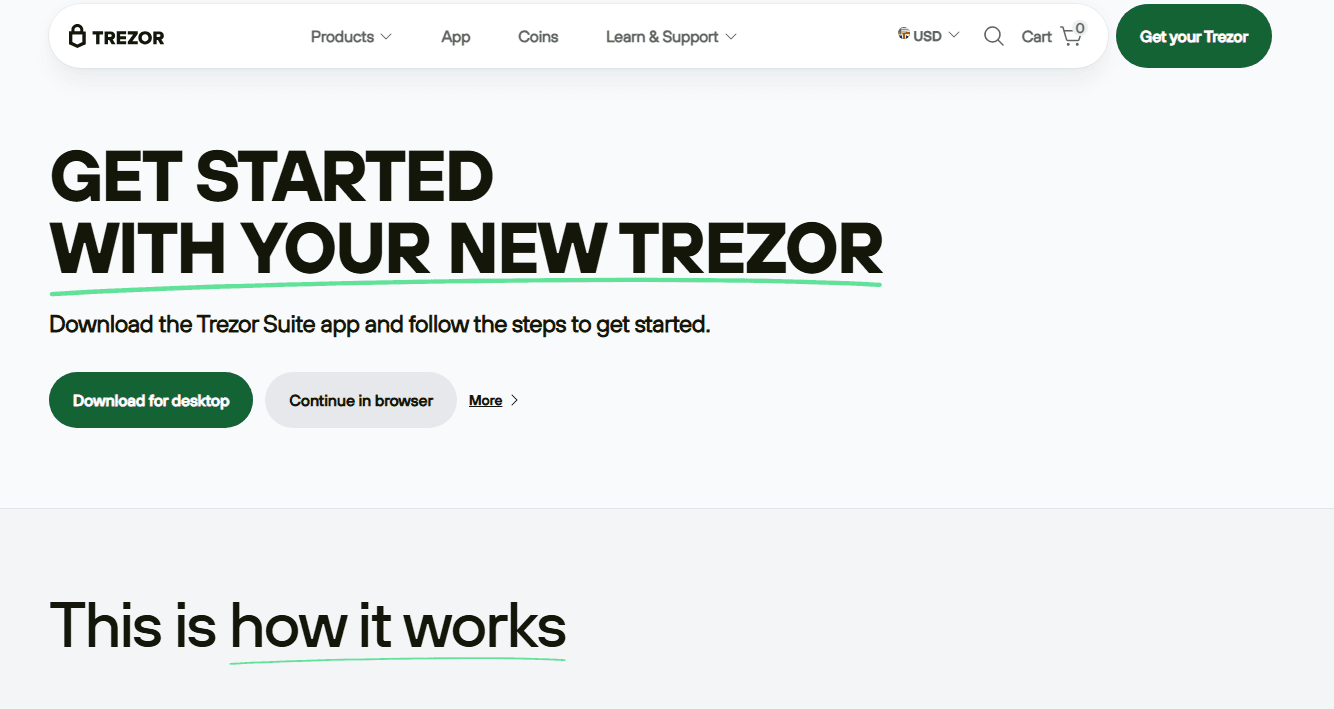
Introduction to Trezor.io/Start
Trezor.io/start is the official guide for anyone looking to securely manage and protect their cryptocurrency holdings. In the rapidly growing world of digital assets, security is a top priority. Trezor provides hardware wallets and companion software designed to give users full control over their digital assets while protecting private keys from online threats such as hacking, phishing, and malware.
The platform provides a structured introduction to the Trezor ecosystem, including setting up your device, installing Trezor Suite, understanding private keys, and performing secure transactions. Trezor.io/start ensures users can confidently take control of their cryptocurrency holdings from the very beginning.
Why Trezor is Essential for Cryptocurrency Security
Cryptocurrencies are entirely dependent on private keys. Unlike traditional financial accounts, losing access to a private key or having it compromised can lead to permanent loss of funds. Trezor hardware wallets solve this problem by keeping private keys offline in a secure, tamper-resistant device.
Trezor.io/start emphasizes the importance of hardware-level security. All sensitive operations are executed on the device itself, and transactions require physical verification. This ensures users retain complete control over their assets while reducing risks associated with online threats.
Getting Started with Trezor
Setting up a Trezor device is simple but must be done carefully to ensure security. The steps outlined in Trezor.io/start include:
Receiving Your Trezor Device: Always buy a Trezor device from official sources and verify the packaging is untampered. This ensures you receive a genuine and secure device.
Initializing the Device: Connect the Trezor hardware wallet to a computer or mobile device and follow the on-screen instructions to configure language, PIN, and initial setup.
Creating a Secure PIN: A personal PIN protects the device from unauthorized access, even if it is lost or stolen.
Generating a Recovery Seed: The recovery seed is the most critical security component. It allows users to restore access to their cryptocurrency if the hardware wallet is lost or damaged. Trezor.io/start guides users on securely writing down and storing this seed offline.
Installing Trezor Suite: Trezor Suite is the official software that allows users to manage multiple cryptocurrencies, monitor balances, and perform transactions securely. Trezor.io/start provides step-by-step guidance for safe installation and setup.
Understanding Private Keys and Recovery Seeds
Private keys are the foundation of cryptocurrency ownership. They are cryptographic codes that control access to digital assets. Trezor hardware wallets protect these keys by keeping them offline and requiring physical confirmation for any transaction.
The recovery seed is a backup that allows users to restore their wallet if the device is lost or damaged. Trezor.io/start emphasizes storing the recovery seed offline in a secure location, such as a safe. Sharing or storing it digitally can compromise the security of your assets.
Using Trezor Suite
Trezor Suite is the central interface for managing digital assets with a Trezor hardware wallet. It offers a user-friendly platform to monitor balances, manage multiple accounts, and perform transactions securely.
Trezor.io/start guides users through:
Connecting the hardware wallet to Trezor Suite
Installing supported cryptocurrency applications
Adding and managing accounts for different cryptocurrencies
Sending and receiving digital assets safely
Every transaction is confirmed on the hardware device, protecting users from malware, keyloggers, and unauthorized access.
Security Best Practices
Trezor.io/start provides essential recommendations to ensure the highest level of security:
Never share your PIN or recovery seed: These credentials must remain confidential at all times.
Use trusted devices: Connect your Trezor only to secure and malware-free computers or mobile devices.
Verify transaction details on the device: Always check recipient addresses and transaction amounts directly on the hardware wallet.
Keep the device physically secure: Store the hardware wallet in a safe location to prevent unauthorized access.
By following these best practices, users can minimize risks and maintain full control of their cryptocurrency holdings.
Managing Multiple Accounts and Cryptocurrencies
Trezor hardware wallets support a wide variety of cryptocurrencies. Trezor.io/start explains how users can manage multiple accounts efficiently, allowing for separation of funds for long-term investment, trading, or daily use.
This structured approach helps users organize their portfolio, track performance, and maintain security across multiple assets. Trezor Suite integrates seamlessly with the hardware wallet to ensure that every transaction is verified on the device, keeping private keys offline and secure.
Firmware Updates and Device Maintenance
Firmware updates are critical to maintaining security and ensuring compatibility with new cryptocurrencies. Trezor.io/start provides detailed instructions for safely updating the firmware through Trezor Suite.
Users are guided to:
Verify the authenticity of their Trezor device before updating
Perform firmware updates via Trezor Suite
Confirm updates directly on the hardware device
Regular firmware updates help protect against vulnerabilities and ensure smooth operation of the device.
Backup and Recovery
Backup and recovery are essential aspects of cryptocurrency security. Trezor.io/start emphasizes creating and safeguarding your recovery seed immediately after initializing the device.
Key recommendations include:
Writing the recovery seed clearly and accurately
Storing it offline in a secure location
Never sharing it digitally or online
Following these steps ensures that users can recover their wallet even if the hardware wallet is lost, stolen, or damaged. A secure backup ensures uninterrupted access to assets.
Common Mistakes to Avoid
Trezor.io/start educates users on common mistakes that can compromise security:
Purchasing devices from unofficial sources
Storing recovery seeds digitally or online
Sharing PINs or recovery seeds
Ignoring verification during transactions
Skipping firmware updates
Avoiding these errors helps maintain the safety and integrity of digital assets.
Who Should Use Trezor.io/Start
Trezor.io/start is suitable for a wide range of users. Beginners benefit from detailed guidance and step-by-step instructions to safely enter the cryptocurrency world. Experienced users gain advanced tools for managing multiple accounts, tracking portfolios, and using robust security features.
Investors, traders, and privacy-conscious users can rely on Trezor.io/start to secure assets while retaining full control over private keys and transactions.
Conclusion
Trezor.io/start is an essential resource for anyone beginning their cryptocurrency journey. By providing step-by-step guidance for setting up Trezor hardware wallets, understanding private key management, installing Trezor Suite, and performing secure transactions, it empowers users to take control of their digital assets.
The platform emphasizes security, best practices, and user control, making it suitable for both beginners and experienced users. Following the guidance provided, users can confidently manage digital assets, maintain financial independence, and ensure long-term security for their cryptocurrency holdings.
Trezor.io/start combines usability with advanced security, giving users the knowledge, tools, and confidence to navigate the cryptocurrency ecosystem safely and efficiently. It provides a solid foundation for anyone serious about managing digital assets securely.